
Forbes' 2026 Best Brands for Value: what Costco #1 and Melaleuca #2 have in common
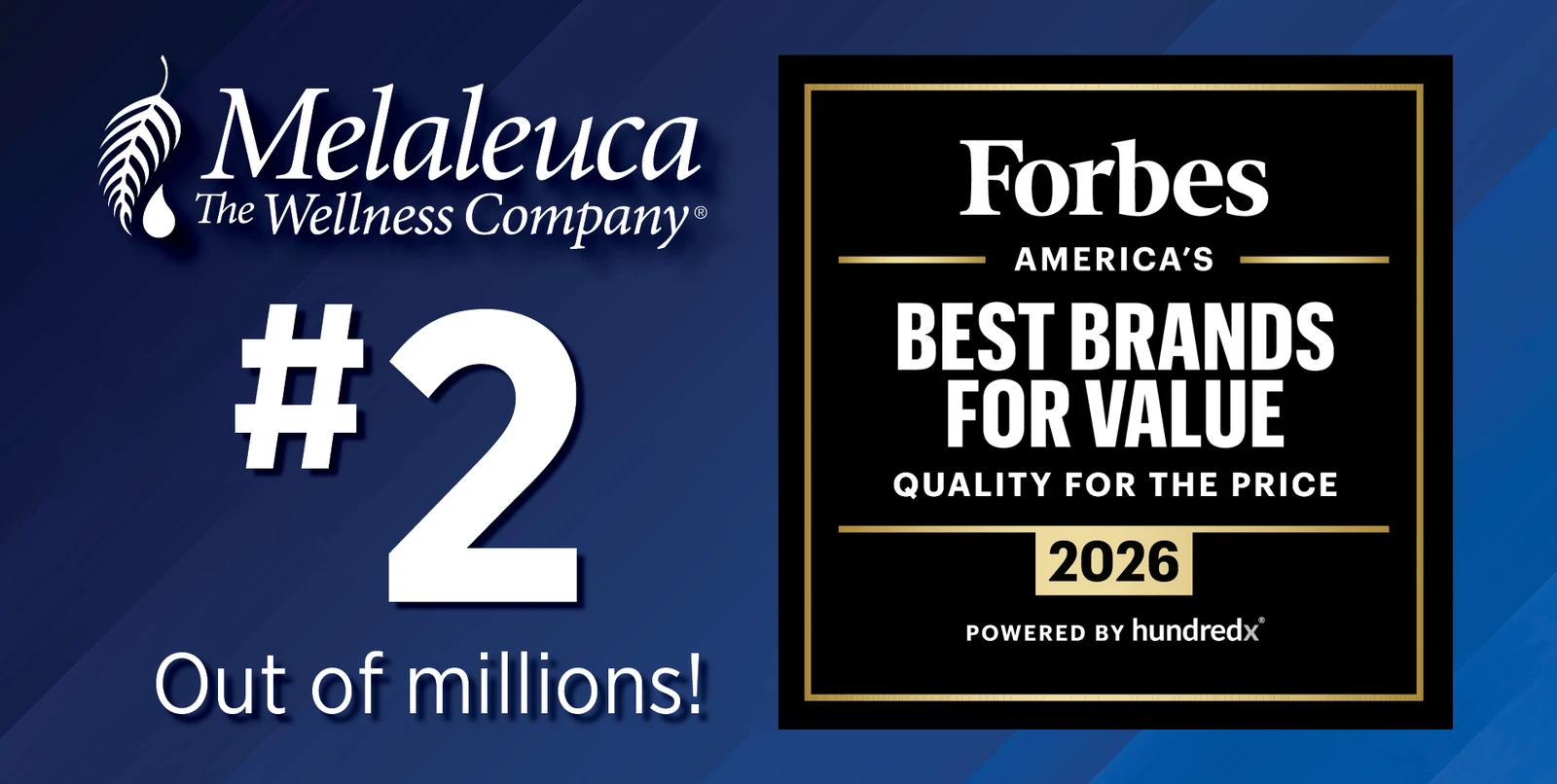
The Forbes 2026 Best Brands for Value list, published June 30, put Costco at number one and Melaleuca at number two. Third through eighth: Lands’ End, Consumer Cellular, Toyota, Drury Hotels, Sam’s Club, and USAA. Canva was the highest-ranked technology brand at number ten.
The ranking is worth reading closely, not for the leaderboard trivia but for what the top of it says about how brands actually generate value at scale in 2026. Two of the top three finishers — Costco and Sam’s Club — operate membership warehouse clubs. The number-two finisher, Melaleuca, operates a manufacturer-direct membership commerce model. These are not three different business models happening to share a leaderboard. They are variations on the same structural insight about how to deliver quality at lower prices than traditional retail channels can support.
How the list was built
The list was produced by Forbes in partnership with HundredX, a consumer insights firm that runs independent brand-perception research through surveys of representative American consumers. The 2026 methodology drew on 4.7 million ratings from approximately 160,000 consumers, across more than 5,500 brands, collected between June 2025 and May 2026. The top 300 brands made the published list.
The rating framework asked a specific question: which brands deliver the best quality for the lowest price. HundredX CEO Rob Pace, quoted in the Forbes piece, described why the framing matters:
“Value’s always been the most important thing in business — every major strategist has concluded that — but it’s always been elusive and hard to define. One of the most important things that a brand can do is provide objective, independent proof that they do provide more value for the price.”
That “objective, independent proof” is the mechanism the list is built to capture. A brand can market itself as a value leader. Consumer ratings at this scale are a different signal — they capture what a broad sample of customers actually perceive after using the products.
Why the top of the list looks the way it does
The clustering at the top is not random. Look at the top eight:
- Costco — membership warehouse club, buyer-curated catalog, pricing funded by membership fees and thin product margins.
- Melaleuca — manufacturer-direct membership catalog, referral commissions replace traditional advertising as the customer-acquisition channel.
- Lands’ End — direct-to-consumer apparel, catalog-and-online model, in-house design and manufacturing relationships.
- Consumer Cellular — MVNO reselling wireless service on major carrier networks, targeting older customers with simplified plans.
- Toyota — established manufacturer, competitive on total cost of ownership across product lifecycles.
- Drury Hotels — family-owned, refuses to franchise, controls experience end-to-end.
- Sam’s Club — membership warehouse club (Walmart-owned).
- USAA — financial services for military families, membership-based, no external advertising until recently.
Six of the top eight brands operate a variant of membership or direct commerce. Two of those six are manufacturer-direct (Melaleuca and Toyota). Three are membership retail (Costco, Sam’s Club, USAA). One is a franchise-free hospitality operation with a tight brand-experience loop (Drury). The pattern is consistent: brands that own the customer relationship end-to-end and eliminate one or more layers of markup show up at the top of consumer value rankings.
The structural insight
The traditional retail supply chain runs manufacturer → wholesaler → retailer → customer. Each step in that chain adds a markup — the wholesaler needs a margin, the retailer needs a margin, and the retailer also spends heavily on paid advertising to bring customers into the store or to the site. By the time the product reaches the consumer, the markup-plus-marketing stack has typically added 50-100% or more to the manufacturer’s cost.
The models at the top of the Forbes list systematically remove one or more of those layers.
Costco’s model removes the retailer’s advertising layer and thins product margins to near-zero, funding operating income primarily through membership fees. Members pay a flat annual $65 to $130 in exchange for access to wholesale pricing on a curated catalog. Product margins run around 14-15% versus a typical retailer’s 25-50%.
Melaleuca’s model removes both the retailer and the wholesaler. The company manufactures its own products in Idaho Falls and Knoxville, ships directly to enrolled members, and pays referral commissions to members who introduce new customers — replacing the paid-advertising line item with a performance-based referral payout. Members shop a private catalog at member pricing each month, and the referring member earns a small recurring commission tied to the introduced customer’s verified purchases.
Both approaches address the same underlying question: how does a brand deliver quality at prices that undercut traditional retail? Both answer: by owning the customer relationship end-to-end and funding customer acquisition through mechanisms other than paid mass-market advertising.
The Consumer Direct Marketing category is the specific name for the manufacturer-direct membership commerce model. Costco’s warehouse-club model is a related but structurally distinct approach — the shared element is that customer acquisition and retention are structured around membership rather than around paid-media-driven transactions.
What Melaleuca’s founder said
Frank VanderSloot, Melaleuca’s founder and executive chairman, gave the Forbes piece a framing worth quoting because it captures the operating philosophy behind the ranking:
“Most people think value means paying less. We think it means receiving more.”
Later in the interview, VanderSloot connects that framing to product quality specifically:
“We’ve learned that if a product is price-based rather than quality-based, then quality’s going to suffer. You start cutting ingredients, you start cutting corners if you’ve got the lowest price. When it comes to wellness products, people don’t want to compromise on quality. They want the best, and they’re willing to pay for the best.”
The tension VanderSloot describes — between racing to the lowest sticker price and maintaining product quality — is the specific tension the membership commerce model is designed to resolve. When a brand’s customer acquisition runs through paid digital advertising, every additional customer-acquisition-cost dollar has to come from somewhere. Historically, in commodity consumer categories, that pressure has come out of product quality — cheaper ingredients, thinner formulations, offshored manufacturing. When acquisition runs through membership, referrals, and retention, the pressure lifts, and the brand can invest in product quality instead.
That is what the top of the Forbes list looks like in aggregate. Companies that structured customer acquisition around something other than paid advertising, and invested the savings back into the product.
Beyond the top two
The rest of the list is worth reading for the same structural pattern.
Drury Hotels (number six) is a family-owned hotel chain that has grown to 150+ hotels across 30 states while refusing to franchise the brand. COO Eric Strand, quoted in Forbes, connects that decision directly to value delivery: “We want guests to leave feeling like they got a good deal, [and] that we met all the promises that we’ve made and that they were able to save a few dollars.” The franchise-free choice keeps the brand experience under direct company control and removes the operator-quality variability that shows up when hotel brands sell franchises. Drury reached approximately $937 million in annual revenue in 2025 and is forecasting close to $1 billion for 2026.
Canva (number ten) is the highest-ranked technology brand. The company reached $4 billion in revenue and a $42 billion valuation in 2025 while keeping most of its product free — only about 12% of Canva’s users pay a subscription fee. Kristine Segrist, Canva’s global head of consumer marketing, framed the model as broadly-accessible tool design: “The easiest way to think about Canva is it is the shortest bridge to anything you can dream up, to being able to make it. We’re building this for me, for you. It’s not for an elite few. It’s not for a domain of designers.” Canva’s freemium approach is a different structural mechanism from Costco’s or Melaleuca’s, but the same underlying pattern applies: acquire users through the product itself rather than through paid advertising, and let the model compound from there.
What the ranking validates
The 2026 Forbes Best Brands for Value list is worth citing for what it independently confirms. Membership commerce, manufacturer-direct distribution, and freemium technology models — all approaches that sidestep the traditional paid-advertising-heavy retail funnel — are overrepresented at the top of the value rankings. That is not a coincidence.
The Consumer Direct Marketing model Melaleuca operates on, and the membership warehouse model Costco runs, are two different structural answers to the same underlying commercial question: how does a brand deliver measurably better value than traditional retail can support. Both models arrived at the top of the Forbes list by making the same structural bet: replace the paid-advertising customer-acquisition mechanism with something member-driven, and put the savings back into the product.
Sources
- Forbes — Melaleuca, Drury Hotels, Canva Join Costco As Top Value Brands (John Schroyer, June 30, 2026)journalism— Primary source for the Forbes Best Brands for Value 2026 ranking.
- HundredX — consumer insights firm and research partner for the Forbes rankingcompany-document
- Melaleuca corporate websitecompany-document
- Costco Wholesale 2024 Annual Report (Form 10-K)regulatory-filing